Side Rail
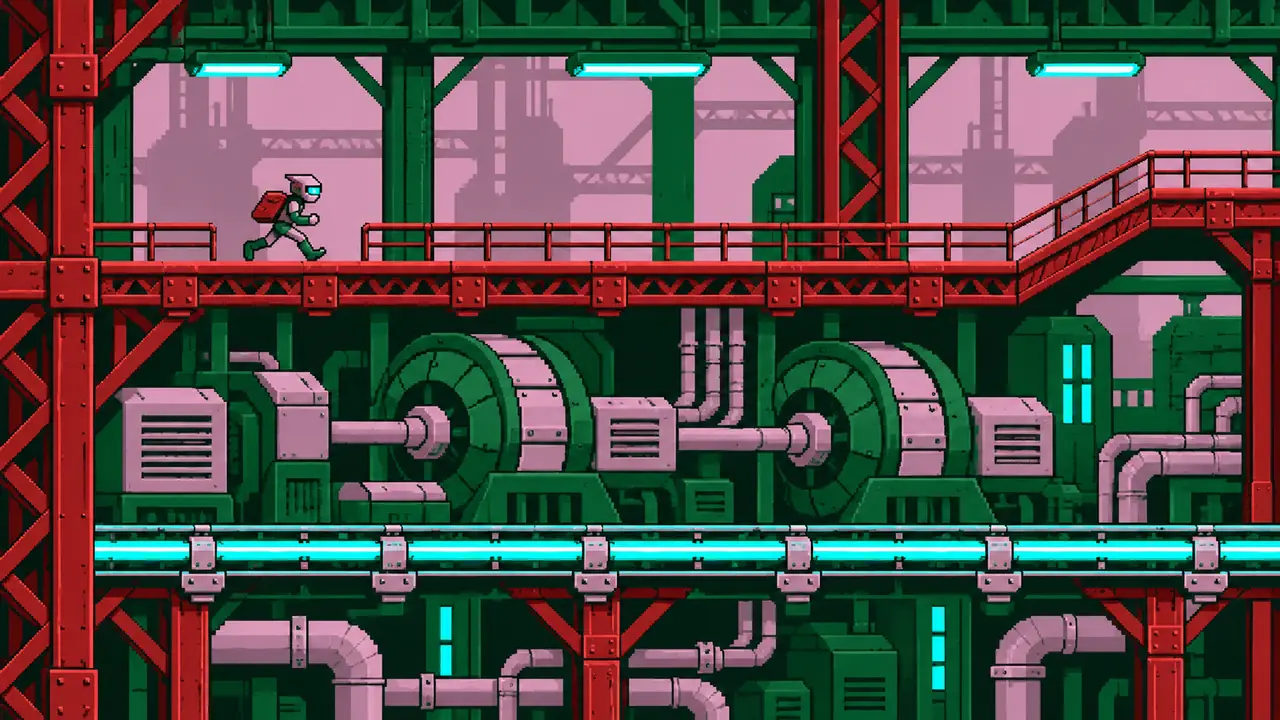
Side Rail begins with a short run-up and a low jump over a motor. At the far edge, a patrol moves through the spot where the player wants to land. If you jump too early, you can fall onto a second rail below the walkway. If you wait too long, the enemy makes you spend part of the credit reaching the same position again. The first screen gives those choices enough room to read.
See the patrol turn before you leave the beam
The loop is to prepare an approach, cross to another rail and review the clearance when you reach the next safe standing point. The first patrol slows near a bolt and resumes after one beat. The motion stays the same across credits so a player can plan the jump around its turn. A short cyan light on the motor becomes visible when it is about to reverse. It gives you another point to use if you started the approach late.
When the jump misses the upper rail, a falling player can catch the lower lip during a brief window. Recovery takes a deliberate input, and the animation records when the grip is secure. You can release to a small standing shelf or climb past the patrol’s turning point. Both routes rejoin the upper walkway, but they offer different time costs and different ways to cross behind the patrol.
Read a next move through the cabinet glass
The artwork uses dark red for the machinery and bright cyan for a rail end that can be grabbed. Green marks a part of the catwalk that can carry you for more than one step. The return route is visible at the same time as the main jump. Our display test uses a thin scanline treatment in the surrounding frame while preserving the narrow edges in the timing area.
The cabinet sounds give an approach a little more information. A regular tick repeats while the patrol rolls through the first section. A short gap announces the turn. A player who enters during that gap can stay safely on the beam and wait for the patrol to return. Missing that cue should still leave the motor light and the silhouette available as clear ways to plan a landing.
Keep the recovery useful on the last credit
The current scoring prototype credits a clean crossing and shows a recovery separately. A saved jump can keep the run going even when the original crossing bonus has been lost. If the lower shelf leads back to the next screen, the player can still improve earlier or later decisions across the run. A record after the screen describes which approach was used so a later credit can test a deliberate change.
Side Rail is in prototype development. The current exercise concentrates on the first two turns and on whether the return point can be anticipated from the lower shelf. Read the recovery window note for how a held grip became readable and the patrol note for the upcoming turn. Select Game places this exercise beside the timing decisions on the lift.