Select Game
Use the selector to examine one cabinet programme at a time. Both projects remain available by their text links. The selector tells you what the first screen is testing and how the player can recover after a mistake. It leaves the full sequence and scoring decisions to the concept pages.
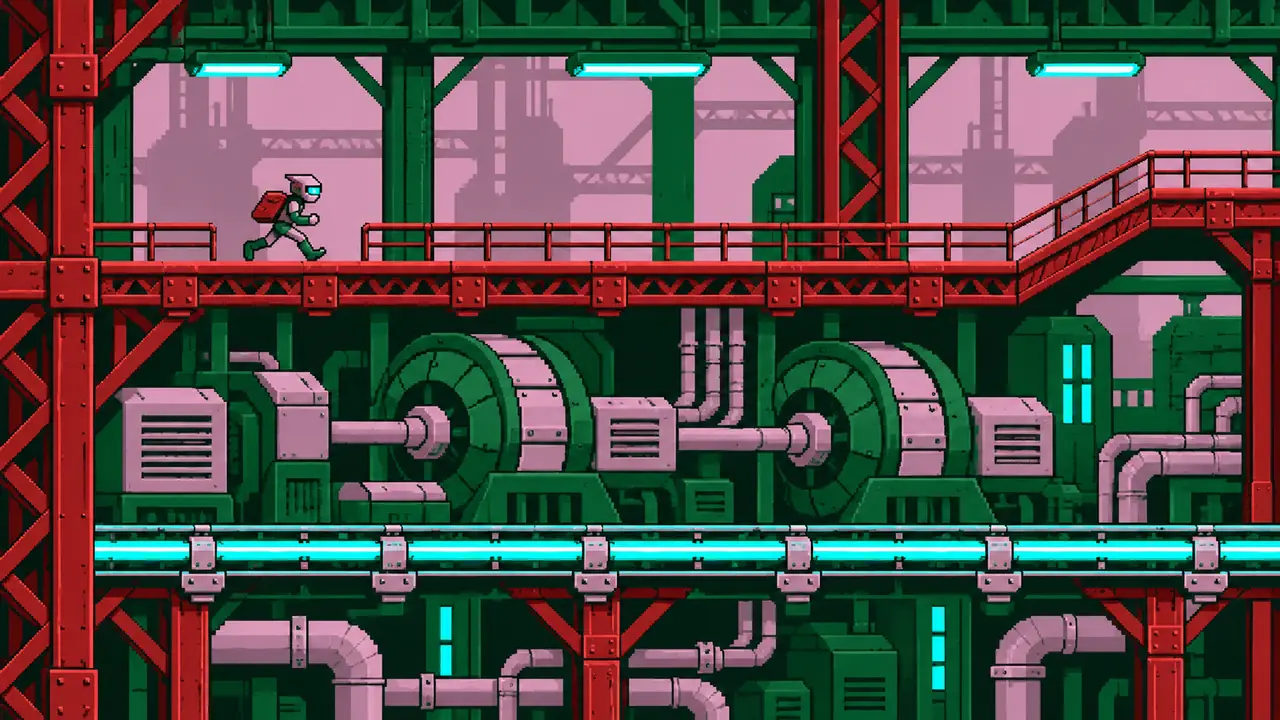
Open Side Rail · Recover at the lower lip.
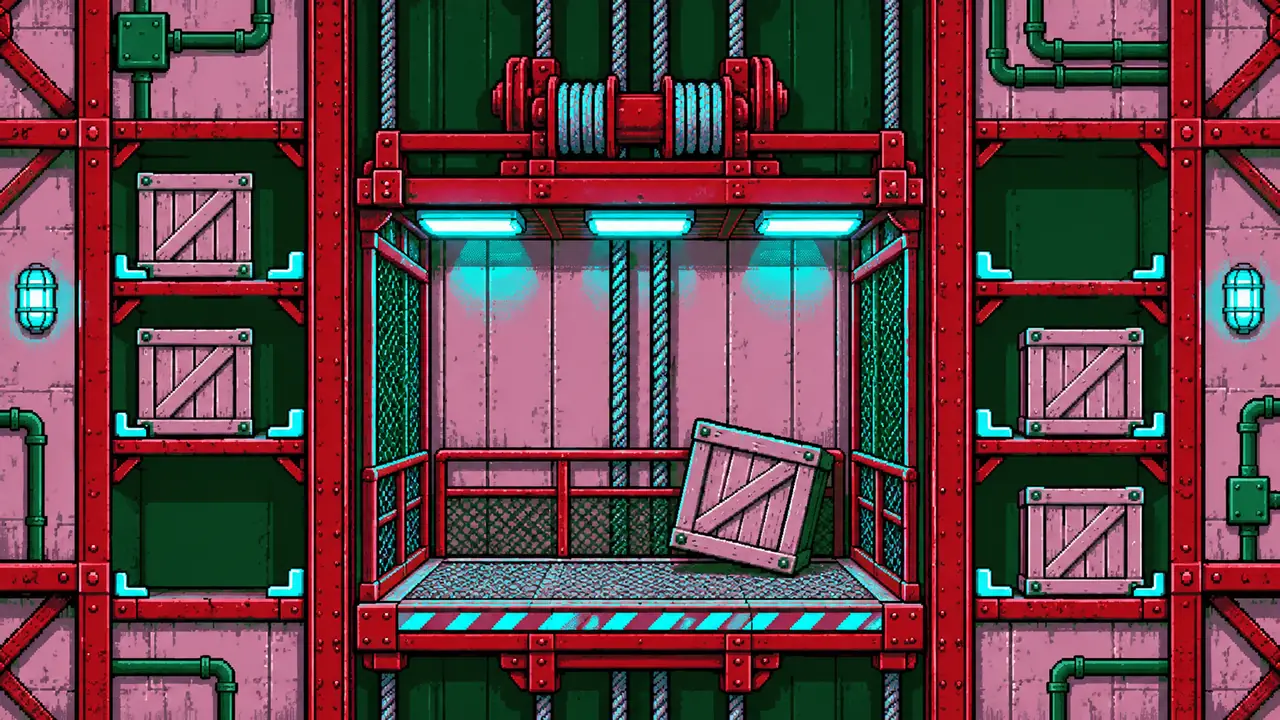
Open Midnight Stack · Recover the route at the damaged load slot.
One mistake below a narrow walkway
Side Rail begins at the end of a service beam. A patrol reads clearly from the starting position. Once the player jumps, a nearby motor cuts across the lower part of the route. The upper ledge is the quickest line. The lower handrail gives you a second chance at reaching the next screen. Its return point is close enough to the patrol for timing to remain important.
Choose this concept for work on repeated movement. A short practice section lets you approach the same turn from both rails and check which part of the cycle matters. The finishing screen measures clear crossings, saved jumps and time without treating each recovery as a new stage.
A loose container changes the lift
Midnight Stack starts with two empty corners and one shelf marked for a heavy load. Each lift stop lets you relocate a container before the floor begins moving. Moving too early can pin the next crate in the wrong corner. A recovery station at one edge accepts a damaged load, leaving fewer choices later.
Choose this concept to examine a compact route that changes with use. A careful placement earns room to move on the very next stop. A high scoring placement may consume an open lane the player will need later. The two results are visible on the same board so the player can plan another credit with a particular change in mind.
Read the scoring notes for the rule revisions that sit behind these options. Both programmes are fictional prototypes in development.