Midnight Stack
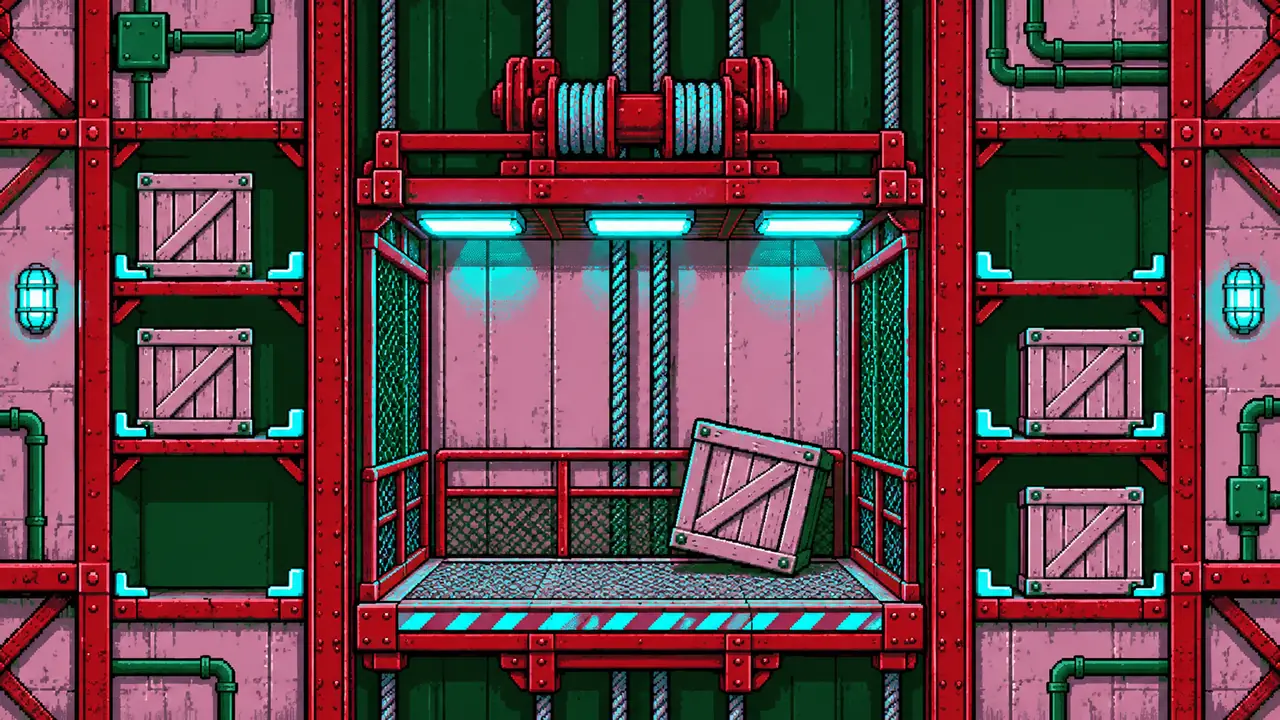
Midnight Stack follows a freight operator driving a small lift through a quiet shaft. At each stop a shelf releases one crate. The operator can stack it against a wall, put it on the next transfer point or return a damaged load through a narrow recovery gate. The floor starts moving again once the release point is clear. There is time for a useful decision before another compartment opens.
Make room for the next stop
The main loop is to look ahead one release, place the current crate, get out of its path and watch what the lift changes on the next floor. Red marks the heavy shelves that have to carry their own load. A cyan lamp marks an empty transfer point. The operator can walk across a green strip at the edge even when two crates occupy the middle. The current floor plan can be read while a shelf unlocks.
A release happens in the same order on repeat credits, but the available floor depends on what the player placed earlier. A corner bonus can look attractive when the lift is mostly empty. It can take away the space needed to turn the next load. If a heavy crate is approaching from the other side, a quieter placement now can make two safe moves possible later.
Recover a route without resetting the floor
A dropped crate can tip onto the walkway. Small damage may leave enough of the lane open for the operator to reach the recovery gate. Use the gate to dispatch the damaged load and continue. A larger box can leave the corner closed for several stops. The floor does not reset when you make the next correct move, so the recovery is still part of the route you are playing.
We keep the corners visually distinct. The heavy shelves are squat forms against a muted pink background. Slanting side braces show how much space a crate occupies without making the floor look like a spreadsheet. A bright edge indicates which gate is ready. The sound of the lift relay counts down the last interval to movement. It has a plain visual counterpart beside the gate so the operator can work with the cabinet muted.
Read the score at the end of a useful run
The score records successful transfers, bonus placements and continuation after a damaged crate. A recovery receives its own report line and does not collect the original placement bonus again. The next credit can compare whether an early bonus created more trouble than it paid for. The run summary points to the first unavailable corner rather than only displaying a total.
Midnight Stack is in prototype development. The current version tests three successive floors and the recovery path around the middle shelf. Read the score records to see when a transfer is counted. The display review follows the legibility checks for the floor and the summary screen. At the selector you can compare its floor planning with a single jump and recovery in Side Rail.
Successful planning leaves a little room at the next stop. That space has value before a point is applied, because it lets the player change their mind while the load remains at the shelf.