The Return Window
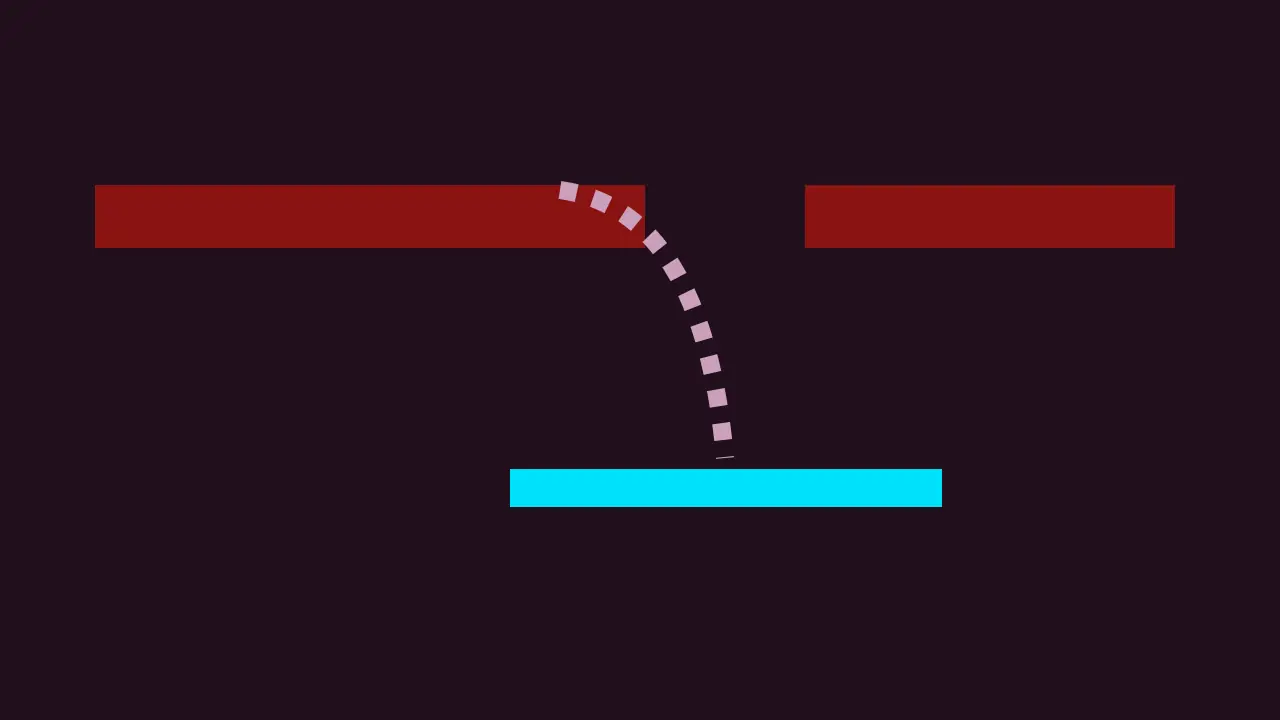
When a jump failed in the first Side Rail prototype, the character dropped behind the machine border. The player could catch a lower rail with a quick action, but could not see when that action was available. We wanted the recovery to feel intentional. This required a visible gap between falling past the upper lip and reaching a position where another route was possible.
Show enough of the lower path before the jump
The opening shape is a short runway that ends near a belt housing. Behind the housing the top of another rail lines up with the falling player. The first background put a horizontal pipe across the same image row. Both had similar colors, so it was hard to tell which surface belonged to the route. We moved the pipe down and gave the usable lip a wider clear edge.
The rail must be visible before somebody leaves the beam. That gives them a chance to think about a possible miss. If the rail only lights at the last moment, the flash tells them a decision is present after they have started acting. The current practice screen keeps both paths visible until the jump takes place. The recovery cue is a small change to a thing you can already identify.
Keep the input window tied to a shown motion
The catch begins when the falling hand reaches the upper edge of the lower rail. It remains valid until the body is too far past the lip to make a useful grip. The testing animation shows the hand move inward as the chance closes. A successful input displays a distinct held shape. If the hand continues past the edge, the normal fall finishes, so the player can see whether they missed the grip or pressed at a useful time.
Earlier the character snapped to the rail from too far away. It made the rescue generous, but you could not anticipate where the climb would start. A smaller catch area works when the window is easier to see. We test whether the motion remains readable from the other side of the screen. A player should be able to describe where they pressed the control and why the next attempt might differ.
Give the recovery an immediate route decision
Once a grip is held, the player can step down to a short shelf or climb directly back to the main walkway. Dropping to the shelf takes more time and leaves the character behind the patrol. Climbing keeps the next jump within reach but brings the patrol into the landing area earlier. The motor’s light remains visible from both positions so the player can judge when the route opens.
The first recovery led directly to a clear upper platform with no need to look at the patrol again. That erased the consequences of an early jump, even though the player still had a chance to finish. Keeping one pattern relevant after a miss lets the recovery feel tied to the rest of the screen. Its place in the score remains separate from a clean crossing.
Compare a saved jump and a planned route
Side Rail uses the lower lip to let the player continue on a last credit. A planned approach can still be quicker, especially if the next turn happens while the player is moving back up. The patrol cycle record explains where to find the visual turn cue after coming back from below. In review we ask a player to show where they can drop to the shelf, when they would prefer the climb and what it would take to clear the top route on another try. One good recovery gives them a real way to study the next approach.